
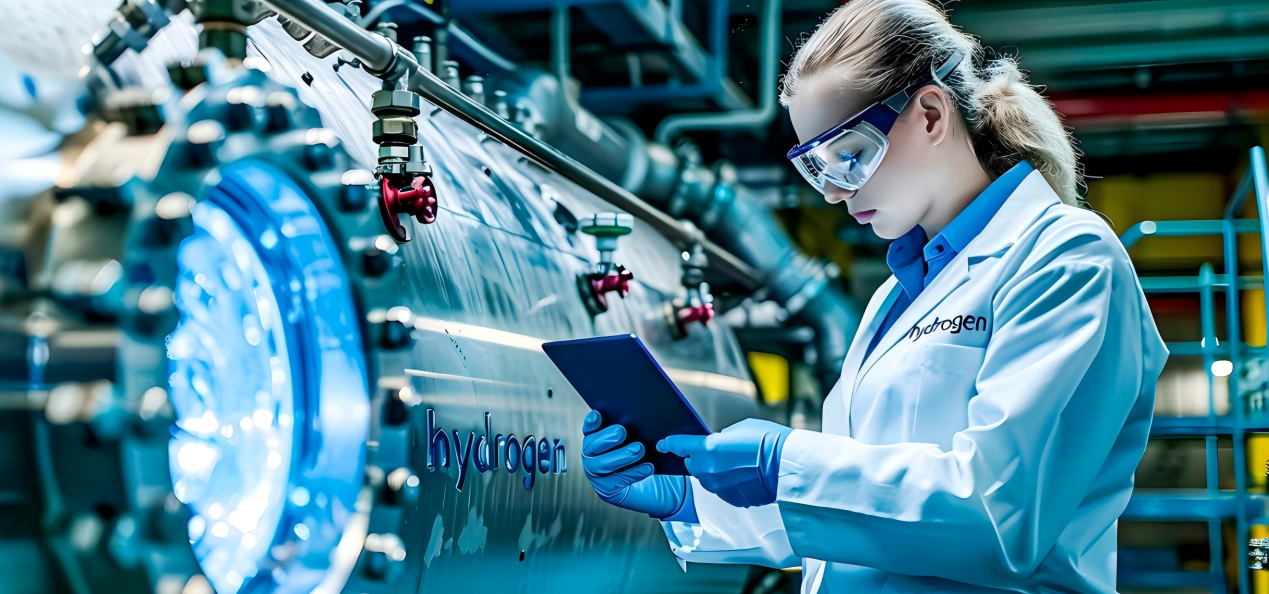
Hydrogen energy is a key technology for SMEs. Our latest position paper highlights the opportunities, challenges and pathways of the energy transition.
Hydrogen is increasingly seen as a key technology for meeting Europe’s climate targets. The German government’s national hydrogen strategy also highlights the importance of hydrogen: it will play a central role in Germany’s climate-neutral energy supply and in decarbonising the economy. The aim is to build up enough capacity to meet 50 per cent of Germany’s hydrogen demand independently by 2030.
Challenges in Widespread Use
Despite the huge potential of hydrogen energy, there are still many obstacles to its widespread adoption as a climate-neutral energy source. At present, the production, transportation and associated costs of hydrogen are not perfect enough to ensure large-scale economic use. These uncertainties make it difficult for hydrogen to be integrated into economic processes in the near future.
The Potential For SMEs
Still, hydrogen has interesting potential uses, especially for SMEs. Industries such as metal processing, food production and agriculture can all greatly benefit from hydrogen. To take advantage of these opportunities effectively, BVMW e.V. is committed to implementing the German government’s hydrogen strategy in a manner friendly to SMEs.
The Needs of SMEs
The federal government’s program must take into account the special needs of SMEs. To avoid misinvestments, a realistic assessment of the economy’s hydrogen needs is essential. Due to the high cost of purchasing hydrogen in large quantities, a practical concept of combining the use of hydrogen with renewable energy is needed.
Only through targeted funding and the development of viable solutions can hydrogen become a central building block for the success of economic decarbonisation and energy transition, especially for SMEs.
The Energy Council supports hydrogen policies that benefit SMEs. You can find the entire position paper here:
https://www.bvmw.de/uploads/topics/Energie-und-Nachhaltigkeit/Downloads/Positionspapier-Wasserstoff-im-Mittelstand-11-2024.pdf